


XI. hapax. The object that can only belong to you
XI. hapax. L'objet qui ne peut appartenir qu'à vous
2 min read
Every life is a singular accumulation. Not only in the philosophical sense, in the concrete, almost inventoriable sense. A journey that changed the way you see life, a childhood home whose smell you sometimes catch without warning, a work of art encountered by chance that shifted something deep, an object you are attached to that connects you to someone who is no longer here. All this material, irreducible, that everyone carries without necessarily putting it into words.
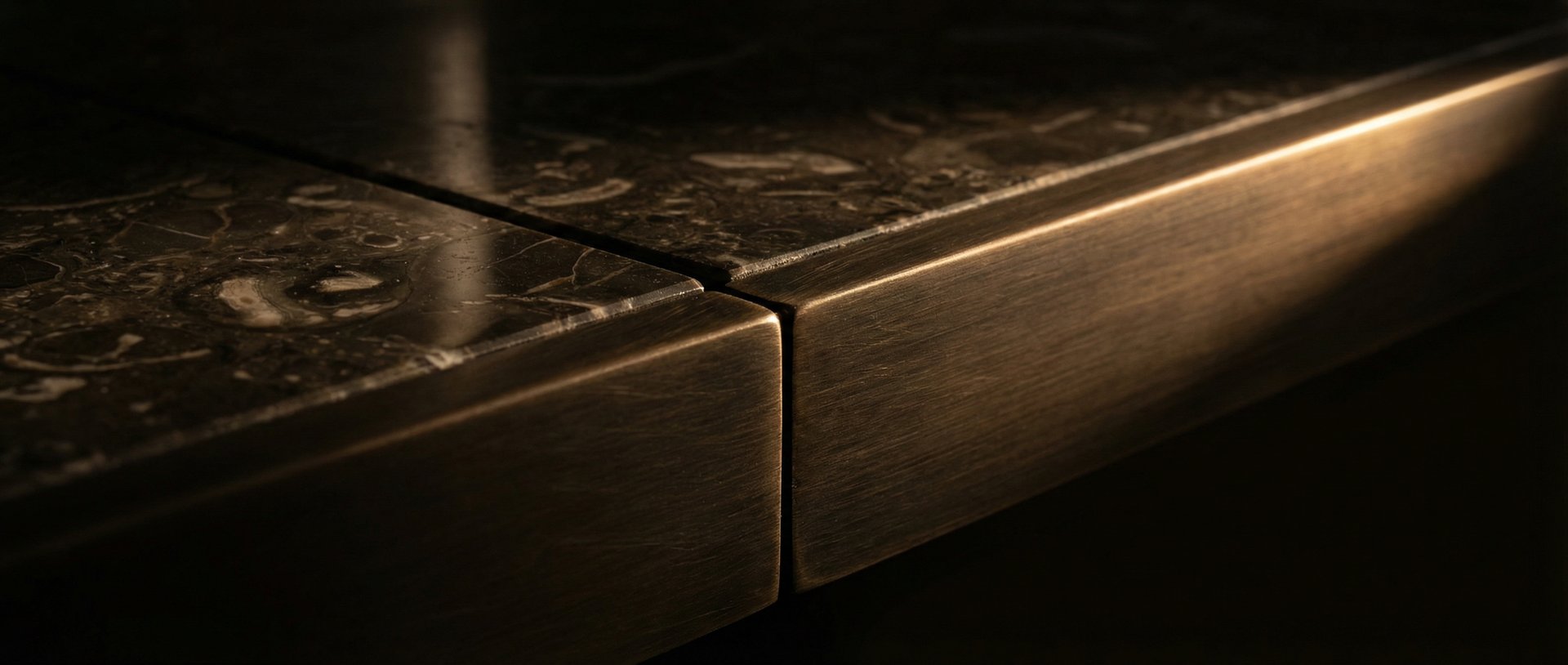
hapax starts from this material. Not to illustrate it, that would be to mistake the register entirely. But to let it act upon form, proportions, materials, the way a piece occupies space.
In linguistics, a hapax is a word that appears only once in the entire history of a language. It cannot be compared or verified by recurrence. It is not a rare word, it is a unique word.
" What I seek is for the owner to recognise something in the piece before being able to explain it."
The process begins with a conversation, open, with no agenda. I am neither therapist nor biographer, but certain things said in a conversation that lasts have a particular density: they call for a response that is not a word but a form. An in-depth questionnaire takes over, exploring what has shaped the person, what inhabits them, what has passed through them. Some questions may seem unusual. That is intentional.
From this listening a work of translation is born, not illustration. A life marked by rigour and rupture does not become a geometric piece with a crack. That is not how it works. It may become, among other possibilities, a structure of absolute precision whose surface carries something indefinable.
What I seek is for the owner to recognise something in the piece before being able to explain it. Something in the proportions, in the material, in the way it occupies space, that corresponds to something they carry and would not have known how to put into words.
2 min read
Every life is a singular accumulation. Not only in the philosophical sense, in the concrete, almost inventoriable sense. A journey that changed the way you see life, a childhood home whose smell you sometimes catch without warning, a work of art encountered by chance that shifted something deep, an object you are attached to that connects you to someone who is no longer here. All this material, irreducible, that everyone carries without necessarily putting it into words.
hapax starts from this material. Not to illustrate it, that would be to mistake the register entirely. But to let it act upon form, proportions, materials, the way a piece occupies space.
In linguistics, a hapax is a word that appears only once in the entire history of a language. It cannot be compared or verified by recurrence. It is not a rare word, it is a unique word.
" What I seek is for the owner to recognise something in the piece before being able to explain it."
The process begins with a conversation, open, with no agenda. I am neither therapist nor biographer, but certain things said in a conversation that lasts have a particular density: they call for a response that is not a word but a form. An in-depth questionnaire takes over, exploring what has shaped the person, what inhabits them, what has passed through them. Some questions may seem unusual. That is intentional.
From this listening a work of translation is born, not illustration. A life marked by rigour and rupture does not become a geometric piece with a crack. That is not how it works. It may become, among other possibilities, a structure of absolute precision whose surface carries something indefinable.
What I seek is for the owner to recognise something in the piece before being able to explain it. Something in the proportions, in the material, in the way it occupies space, that corresponds to something they carry and would not have known how to put into words.
NEXT
Black