V. Scale, or the body as measure
V. Scale, or the body as measure
3 min read
Reduced scale does not have that privilege. A pedestal sculpture, smaller than the person looking at it, must assert itself through its rightness alone. It overwhelms nothing, dominates nothing, it exists at the height of close looking and calls for concentrated attention. You lean in, you slow down. If the piece is not right, that proximity betrays it immediately. It is the most difficult scale to sustain.
I understood this very early, with a piece from my beginnings, a cross of more than three metres entirely covered in electronic circuits, a human skeleton crucified on it, the whole thing painted in glossy black monochrome. During the drawings, I understood that this piece could only exist at real scale. Smaller, it would have lost its force. Larger too. The 1:1 ratio between the skeleton and the viewer's body was almost essential, it was that ratio that created the tension. The piece did not represent a body, it had its exact size, and it was that exactness that made it physically difficult to bear.
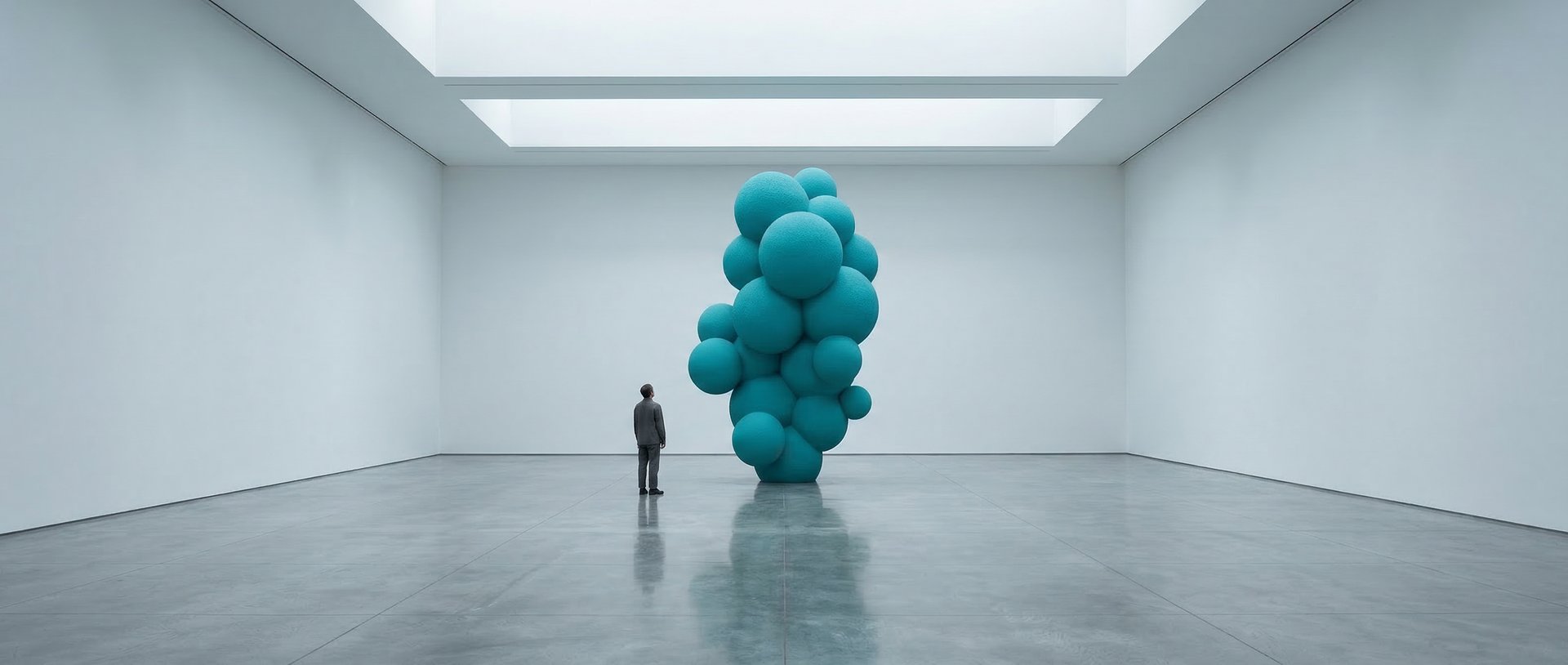
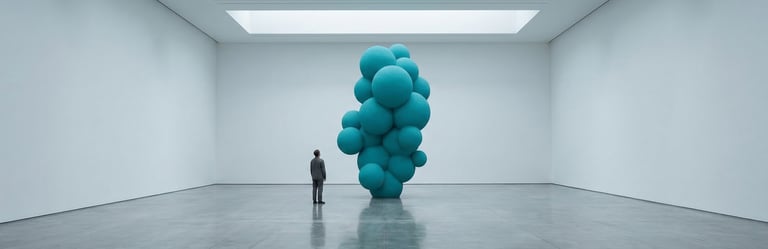
A sculpture larger than oneself reconfigures space. It imposes a minimum distance from which it can be seen whole, it forces the body to step back. It enters the visual field before you have decided to look at it. Monumental scale has that ease: it imposes itself.
" Scale is not a variable you adjust after the fact, it is a decision that precedes form."
Vitruvius placed the human body at the centre of all architectural proportion. For sculpture, what interests me is not the body as a unit of measurement, it is the body as threshold: the point at which a form ceases to be an object you look at and becomes a presence you must reckon with.
Wall sculptures raise yet another question. They have no pedestal, no floor, they belong to the wall without being part of it. Their scale is measured differently, in relation to the surface that carries them and the space they activate around them.
Enlarging a pedestal sculpture does not produce a monumental sculpture, you get an enlarged pedestal sculpture that has lost what grounded it. Scale is not a variable you adjust after the fact, it is a decision that precedes form, sometimes even determines it.
3 min read
Reduced scale does not have that privilege. A pedestal sculpture, smaller than the person looking at it, must assert itself through its rightness alone. It overwhelms nothing, dominates nothing, it exists at the height of close looking and calls for concentrated attention. You lean in, you slow down. If the piece is not right, that proximity betrays it immediately. It is the most difficult scale to sustain.
I understood this very early, with a piece from my beginnings, a cross of more than three metres entirely covered in electronic circuits, a human skeleton crucified on it, the whole thing painted in glossy black monochrome. During the drawings, I understood that this piece could only exist at real scale. Smaller, it would have lost its force. Larger too. The 1:1 ratio between the skeleton and the viewer's body was almost essential, it was that ratio that created the tension. The piece did not represent a body, it had its exact size, and it was that exactness that made it physically difficult to bear.
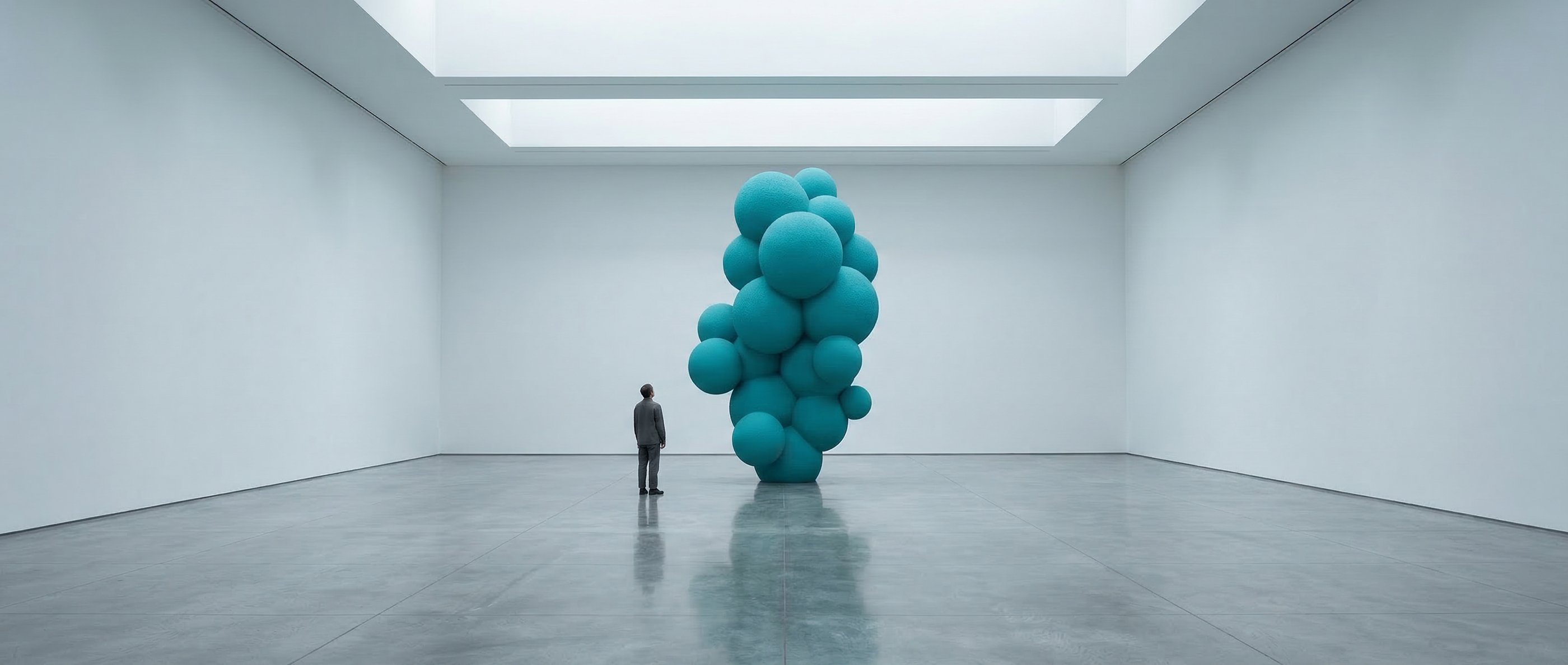
A sculpture larger than oneself reconfigures space. It imposes a minimum distance from which it can be seen whole, it forces the body to step back. It enters the visual field before you have decided to look at it. Monumental scale has that ease: it imposes itself.
" Scale is not a variable you adjust after the fact, it is a decision that precedes form."
Vitruvius placed the human body at the centre of all architectural proportion. For sculpture, what interests me is not the body as a unit of measurement, it is the body as threshold: the point at which a form ceases to be an object you look at and becomes a presence you must reckon with.
Wall sculptures raise yet another question. They have no pedestal, no floor, they belong to the wall without being part of it. Their scale is measured differently, in relation to the surface that carries them and the space they activate around them.
Enlarging a pedestal sculpture does not produce a monumental sculpture, you get an enlarged pedestal sculpture that has lost what grounded it. Scale is not a variable you adjust after the fact, it is a decision that precedes form, sometimes even determines it.