VII. What design owes to sculpture
VII. What design owes to sculpture
1 min read
People classify. It is understandable. Markets need categories, galleries need boxes. But categories describe economies, not forms. And a form has no passport.
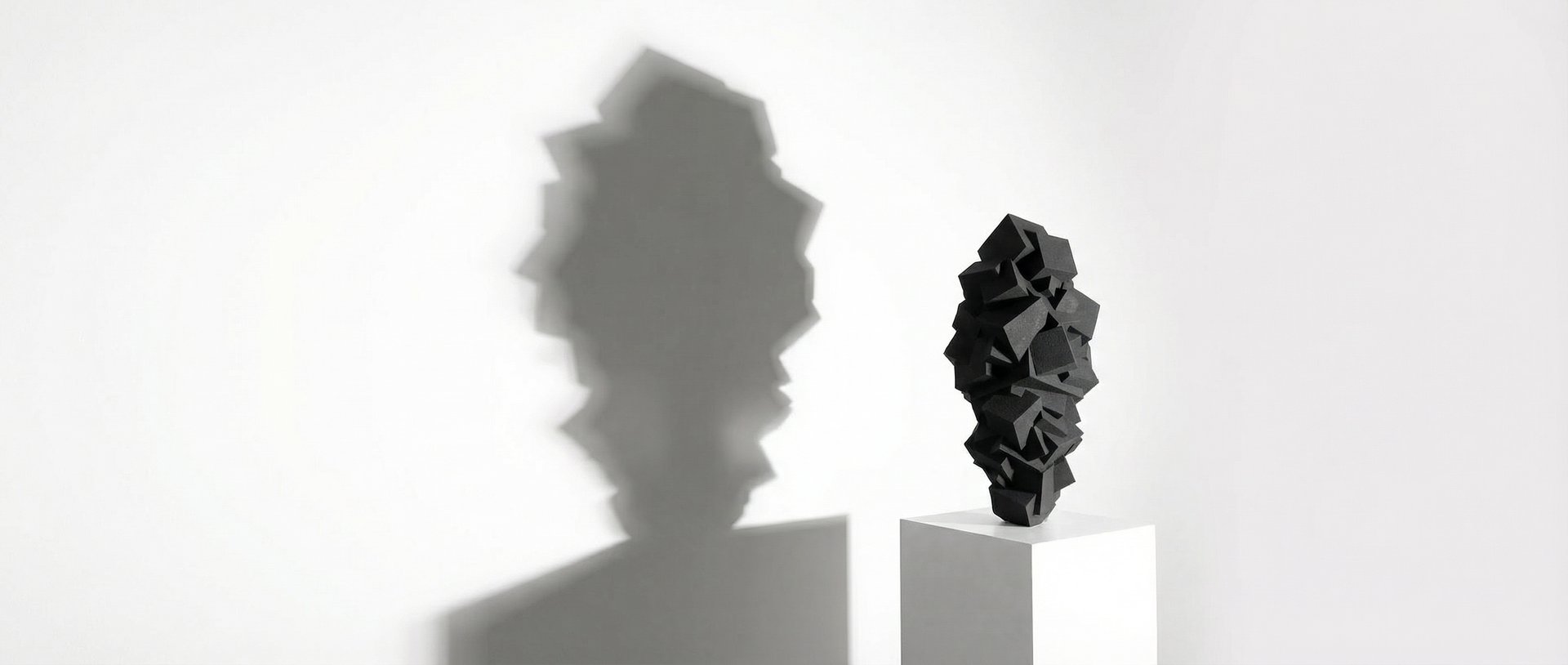
My work is essentially about the geometry of Nature, the intimate structure of matter. The sculptures are a work on form in its pure state, without function, without use, without destination other than itself. Design was its logical continuation: the same work on form, extended into a territory where it must also respond to constraints of use. The Pyrite series marked that transition. What changed was not the gaze, it was the terrain.
Functional constraint, in this context, is no different from an ordinary formal constraint. A table must be a certain height, stand upright, withstand use. These are parameters, just as gravity is a parameter for sculpture.
The question comes back in interviews, in exhibitions: are you a designer or a sculptor? I understand why it is asked. I have no satisfying answer to give, not because I evade, but because the question assumes a boundary that does not exist in the work.
" Categories describe economies, not forms. And a form has no passport.
The result: objects that some regard as works of art and others integrate as furniture. I have no fixed opinion on this. What matters to me is that the piece is formally right. The rest is a question of market.
1 min read
People classify. It is understandable. Markets need categories, galleries need boxes. But categories describe economies, not forms. And a form has no passport.
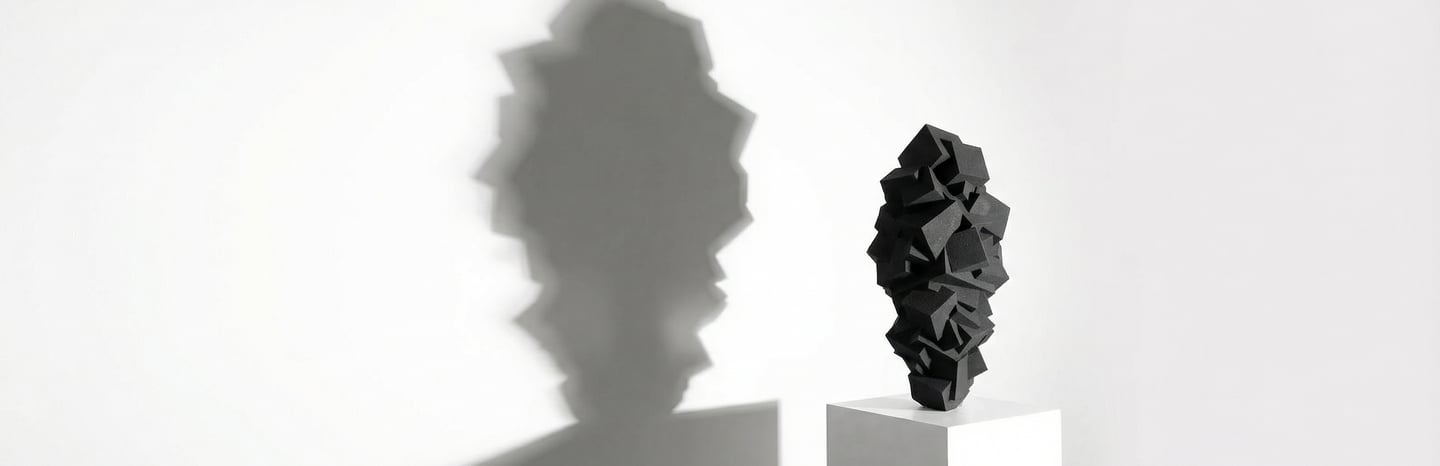
My work is essentially about the geometry of Nature, the intimate structure of matter. The sculptures are a work on form in its pure state, without function, without use, without destination other than itself. Design was its logical continuation: the same work on form, extended into a territory where it must also respond to constraints of use. The Pyrite series marked that transition. What changed was not the gaze, it was the terrain.
The question comes back in interviews, in exhibitions: are you a designer or a sculptor? I understand why it is asked. I have no satisfying answer to give, not because I evade, but because the question assumes a boundary that does not exist in the work.
" Categories describe economies, not forms. And a form has no passport."
Functional constraint, in this context, is no different from an ordinary formal constraint. A table must be a certain height, stand upright, withstand use. These are parameters, just as gravity is a parameter for sculpture.
The result: objects that some regard as works of art and others integrate as furniture. I have no fixed opinion on this. What matters to me is that the piece is formally right. The rest is a question of market.