VIII. Constraint as condition

VIII. Constraint as condition
3 min read
Constraints are reassuring. They frame. They define a field of action, and it is within that field that the work truly begins. A given dimension, an imposed material, an existing architecture: these are not limitations, they are parameters. They do not reduce possibilities, they refine them.
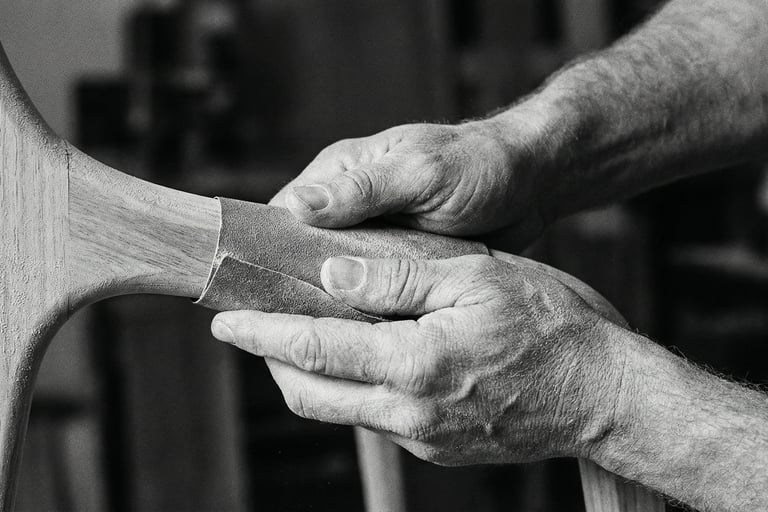
In sculpture, constraints are physical: gravity, the resistance of materials, the limits of what a technique allows. In design, they multiply: use, ergonomics, durability, sometimes a specific space with its own demands. What does not change is the way of approaching them. I do not work despite constraints, I work with them, from within them.
I have never considered constraint as something negative. I have never suffered it. It has always been part of my practice, as sculptor and as designer. My work is structured, organised. I have never fit the cliché of the bohemian artist for whom any constraint would be an impediment to creation.
" I do not work despite constraints, I work with them, from within them."
In a commission, there is a dimension that is not technical: the client himself. Understanding what a person is truly looking for, not what they say they are looking for, not the formulated brief but what is perhaps behind it, is a work of listening that weighs on the final form as much as any dimensional data.
hapax pushes this logic to its most radical point. No longer a space or a function as constraint, but an entire existence. A life, with everything it contains that is irreducible, becomes the formal programme. The ultimate constraint.


3 min read
Constraints are reassuring. They frame. They define a field of action, and it is within that field that the work truly begins. A given dimension, an imposed material, an existing architecture: these are not limitations, they are parameters. They do not reduce possibilities, they refine them.
In sculpture, constraints are physical: gravity, the resistance of materials, the limits of what a technique allows. In design, they multiply: use, ergonomics, durability, sometimes a specific space with its own demands. What does not change is the way of approaching them. I do not work despite constraints, I work with them, from within them.
I have never considered constraint as something negative. I have never suffered it. It has always been part of my practice, as sculptor and as designer. My work is structured, organised. I have never fit the cliché of the bohemian artist for whom any constraint would be an impediment to creation.
" I do not work despite constraints, I work with them, from within them."
In a commission, there is a dimension that is not technical: the client himself. Understanding what a person is truly looking for, not what they say they are looking for, not the formulated brief but what is perhaps behind it, is a work of listening that weighs on the final form as much as any dimensional data.
hapax pushes this logic to its most radical point. No longer a space or a function as constraint, but an entire existence. A life, with everything it contains that is irreducible, becomes the formal programme. The ultimate constraint.