II. Why make rather than say
II. Why make rather than say
3 min read
Language is powerful. It can name almost everything: the nuances of a subjective experience, the relationships between abstractions, truths one would not have seen without the words to formulate them. But there is a point where it stops. Not from weakness. By nature. You can describe a texture, a tension between two volumes, the way a surface catches the light. The description will be accurate, perhaps even precise. It will never be the thing.
Form accesses what language can only approach. It operates differently: no demonstration, no argument, something that presents itself and, if it is right, reaches the body before thought has had time to intervene. You do not understand a sculpture the way you understand a sentence. You receive it.
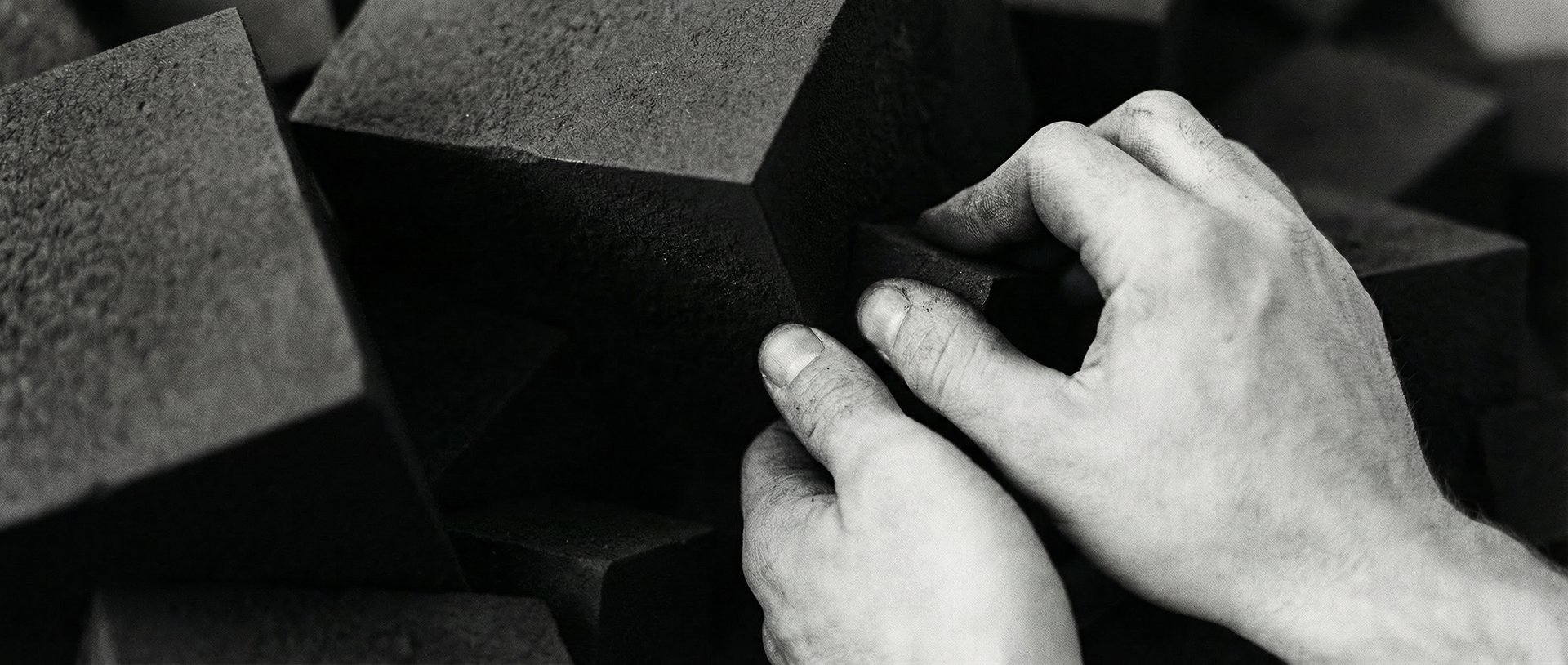
There is also something irreducibly physical in fabrication that has no equivalent in pure thought. The resistance of material is not an obstacle, it is an interlocutor. It responds, pushes back, sometimes proposes something you had not foreseen.
The question presented itself to me quite clearly once: wouldn't what I have to say be better said with words? I had things to express, I knew how to formulate them. Making objects takes considerable time, often fails, and does not speak to everyone.
" The words I write here, including these, I will forget. The pieces, they remain somewhere."
An object, once in the world, remains there without me. It circulates, changes hands, enters spaces I will never see. It no longer needs to be defended, it defends itself. This independence has something right about it that discourse does not.
In the relationship with contemporary art, in France in particular, there is an exaggerated need to justify the existence of a work through the text that accompanies it. The critical analysis, the conceptual framing, the artist statement that is three times the size of the piece. As if the work were not enough, as if its rightness had to be defended through words, sometimes built entirely through words. I have always found this suspect. When discourse exceeds the object to that degree, it is rarely to reveal it. It is to fill what is not there.
So: why make rather than say? I have no definitive answer. What I know is that the words I write here, including these, I will forget. The pieces, they remain somewhere. Perhaps that is the real answer.
3 min read
Language is powerful. It can name almost everything: the nuances of a subjective experience, the relationships between abstractions, truths one would not have seen without the words to formulate them. But there is a point where it stops. Not from weakness. By nature. You can describe a texture, a tension between two volumes, the way a surface catches the light. The description will be accurate, perhaps even precise. It will never be the thing.
Form accesses what language can only approach. It operates differently: no demonstration, no argument, something that presents itself and, if it is right, reaches the body before thought has had time to intervene. You do not understand a sculpture the way you understand a sentence. You receive it.
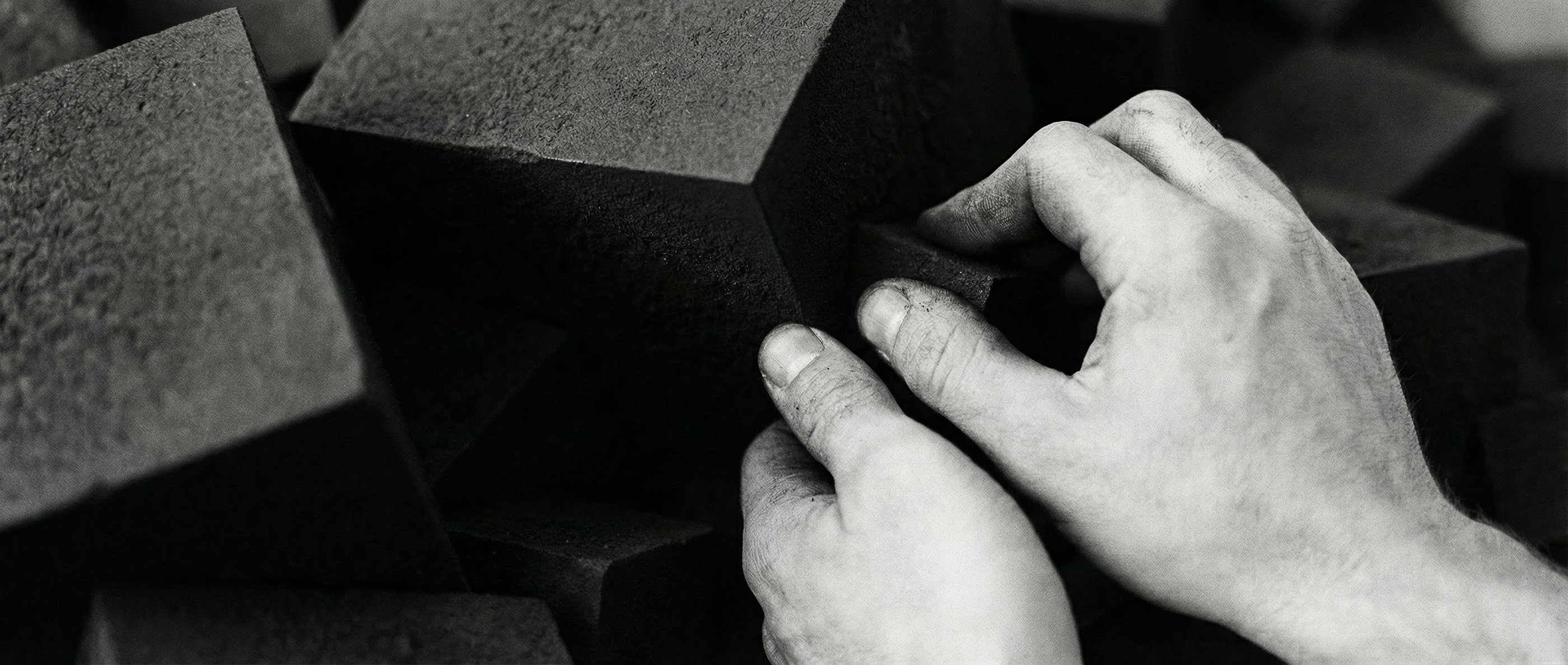
There is also something irreducibly physical in fabrication that has no equivalent in pure thought. The resistance of material is not an obstacle, it is an interlocutor. It responds, pushes back, sometimes proposes something you had not foreseen.
The question presented itself to me quite clearly once: wouldn't what I have to say be better said with words? I had things to express, I knew how to formulate them. Making objects takes considerable time, often fails, and does not speak to everyone.
" The words I write here, including these, I will forget. The pieces, they remain somewhere."
An object, once in the world, remains there without me. It circulates, changes hands, enters spaces I will never see. It no longer needs to be defended, it defends itself. This independence has something right about it that discourse does not.
In the relationship with contemporary art, in France in particular, there is an exaggerated need to justify the existence of a work through the text that accompanies it. The critical analysis, the conceptual framing, the artist statement that is three times the size of the piece. As if the work were not enough, as if its rightness had to be defended through words, sometimes built entirely through words. I have always found this suspect. When discourse exceeds the object to that degree, it is rarely to reveal it. It is to fill what is not there.
So: why make rather than say? I have no definitive answer. What I know is that the words I write here, including these, I will forget. The pieces, they remain somewhere. Perhaps that is the real answer.